
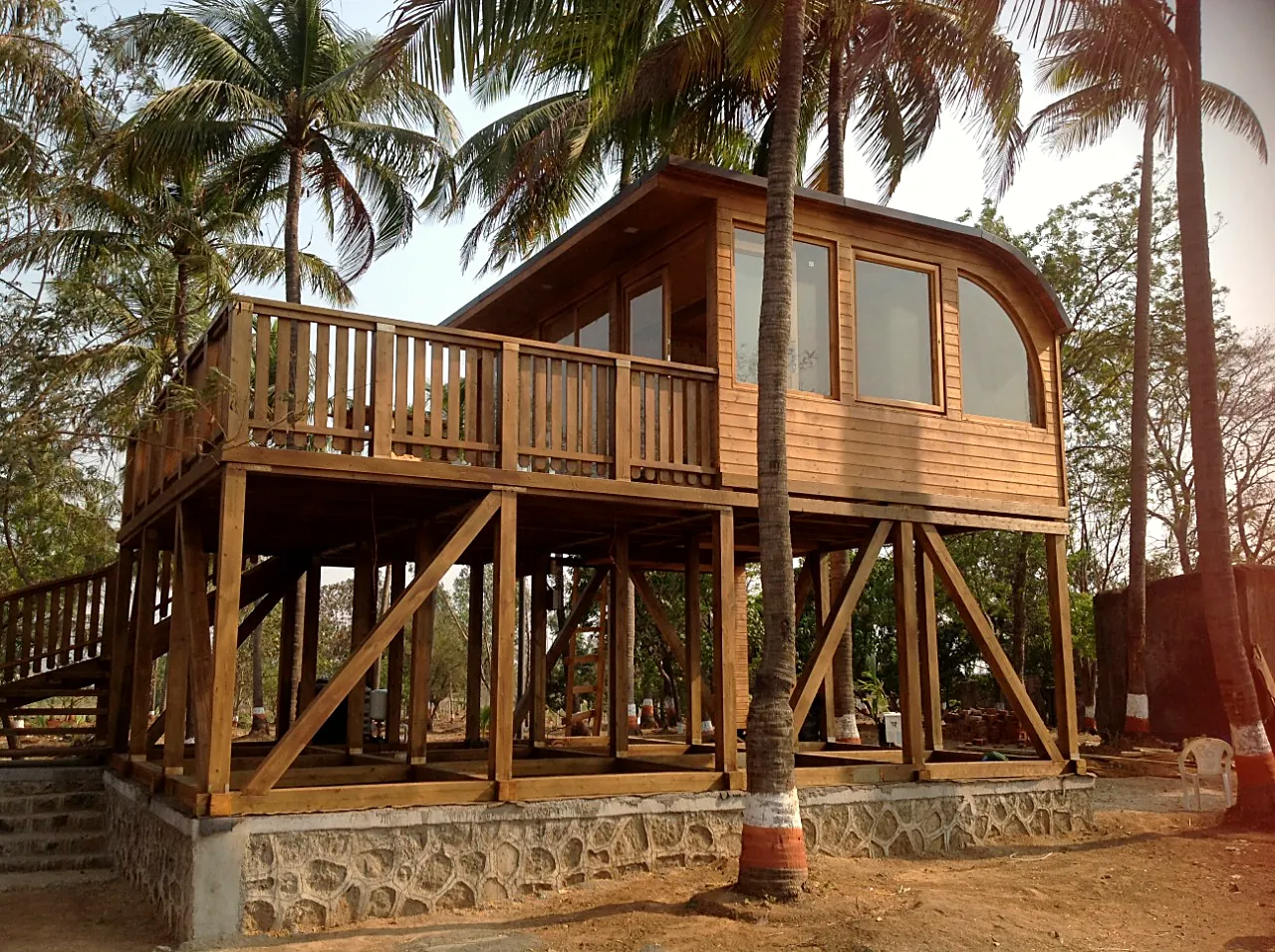
The first question on every site visit is the same: what happens to a wooden house in four months of rain? The short answer is that pine log homes have stood for a century in places with harder weather than ours, and the ones that fail here were never built for the rain in the first place. Here is what a monsoon-ready build looks like.
It starts before the wood reaches the plot. Our imported logs are kiln-dried and treated before they are cut. Treatment is the step cheap structures skip, and it is the difference between a home and a termite feast.
Keep wood off the ground. Every home sits on a raised concrete plinth of at least 1 ft. Wood never touches soil, termites have no hidden route in, and standing water never sits against a wall. On sloping plots we set the plinth into the hill so the house stays level and the water runs away from it.
Keep the walls dry. Roof overhangs of 1 ft on every side mean driving rain lands on the ground, not on the logs. Gutters and downpipes carry it away, and site drainage is drawn on the first visit, not added after the first flood.
Seal and coat. The interior and exterior gets fire resistant polish, which sheds water and takes the sun. We suggest to reapply exterior polish every 5 years, a weekend's work for a local painter with our product list.
Then maintain, lightly. After each monsoon, a twenty-minute walk around the house: coating, gutters, plinth line. Keep soil, planters and firewood away from the walls. That is the whole list.
In case a single plank of wood gets damaged for any reason, we can just replace that plank. No need to tear down the entire wall.
Proof. Our first project was our personal wooden villa project and was constructed 2014. It has handled a decade of monsoons and still stands in all its glory on our site in Panvel, Raigad. We will happily arrange a visit to view.